


Beta glucan, a natural polysaccharide widely distributed in yeast cell walls, cereal grains, and fermentation-derived substrates, has evolved from a biochemical curiosity into one of the most promising immunologically active feed additives in livestock science. Numerous studies have demonstrated that beta glucan plays a decisive role in regulating innate and adaptive immunity by activating macrophages, promoting lymphocyte proliferation, and enhancing cytokine expression. Its structural compatibility with pattern-recognition receptors such as dectin-1 and Toll-like receptors allows beta glucan to initiate immune signaling cascades that enhance resistance to pathogens, improve antioxidative capacity, and support intestinal barrier integrity. These biological effects constitute the mechanistic foundation for its use as an alternative to antibiotic growth promoters, making beta glucan a strategic molecule in global efforts to reduce antimicrobial resistance in the animal-production sector.
Building on this mechanistic basis, the application of beta glucan in swine nutrition has produced measurable improvements in growth and reproductive performance. Supplementation during early development increases average daily gain, enhances feed conversion efficiency, and reduces diarrhea incidence, outcomes directly linked to improved gut immunity and stress resistance. Pregnant sows show elevated immune responsiveness and increased IgG concentrations in colostrum after dietary inclusion of beta glucan, resulting in stronger passive immunity and improved neonatal survival. Although finishing pigs exhibit weaker physiological responses, the cumulative research consensus indicates that beta glucan exerts the greatest benefits during periods of immunological immaturity or environmental challenge, supporting the view that beta glucan contributes not merely to growth promotion but to immune system maturation and metabolic stabilization.
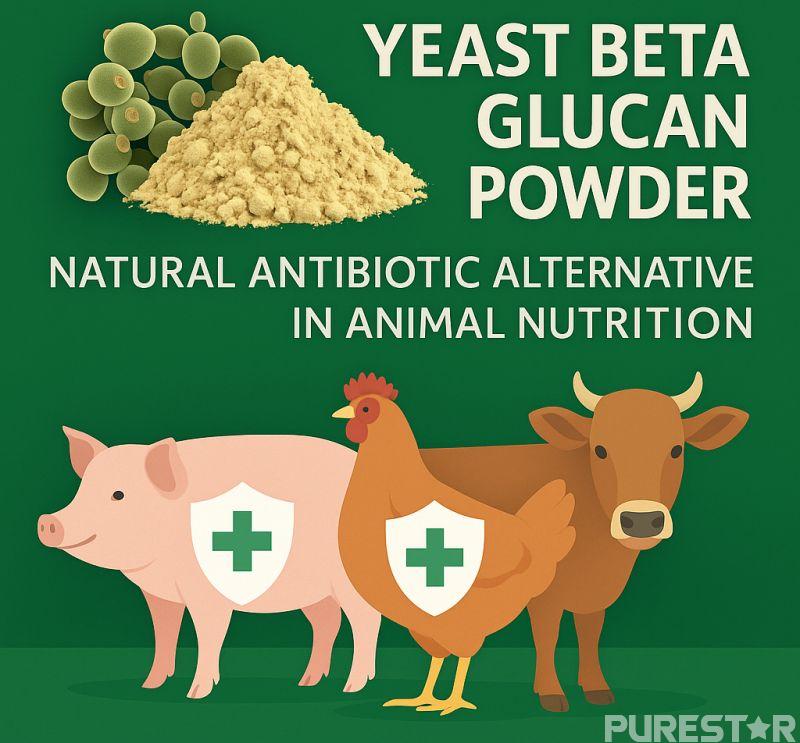
In poultry systems, beta glucan demonstrates a comparable depth of application. Studies have confirmed that beta glucan promotes the development of immune organs, enhances antibody titers following Newcastle or coccidiosis vaccinations, and improves resistance to pathogenic colonization. While growth performance parameters in broilers may not always reflect pronounced differences, the additive’s effects on microbial community structure, gut morphology, and intestinal pH indicate that beta glucan improves the biological foundation upon which production efficiency depends. In laying hens, the inclusion of beta glucan improves egg quality by lowering yolk cholesterol and reducing pathogenic bacterial counts in the intestinal tract, aligning commercial production with consumer and regulatory trends toward high-quality, reduced-antibiotic poultry products. These insights reinforce beta glucan not as a simple performance enhancer, but as a functional immunonutrient reshaping the direction of poultry feed science.
Ruminant research expands the application landscape further. Early-weaned calves, characterized by immature rumen development and susceptibility to gastrointestinal disorders, respond strongly to dietary beta glucan supplementation through increased dry matter intake, elevated serum IgG levels, and enhanced ruminal papilla growth. These effects resemble those of antibiotics traditionally used to support early-life development, offering a non-pharmaceutical pathway toward performance optimization. Similar patterns are observed in young sheep, where beta glucan improves average daily gain and reduces feed-to-gain ratio at appropriate inclusion levels, though excessive dosages may attenuate such benefits. The dose-dependent nature of beta glucan application highlights the importance of precision nutrition in ruminant systems, where immunological stimulation, digestive maturation, and microbial ecology interact in complex regulatory relationships.
Taken together, the scientific body of evidence supports beta glucan as a multi-dimensional bioactive compound that bridges immune modulation with production efficiency. Unlike conventional antibiotics, beta glucan does not act through bactericidal pathways, but through immunological enhancement, intestinal stabilization, oxidative stress reduction, and metabolic regulation. This functional advantage positions beta glucan as a cornerstone additive in antibiotic-reduced or antibiotic-free livestock models, especially as global regulatory systems tighten controls on pharmaceutical inputs. As research continues to refine species-specific responses, molecular mechanisms, and optimal dosing strategies, beta glucan is poised to become a foundational component in sustainable, welfare-oriented, and immunity-driven animal production frameworks.
Contact:
Phone: 0086-13754204265
Tel: 0086-572-2157374
Email: sales@bulkbetaglucan.com
Add: No.235,Huanchengdong Road,Huzhou,Zhejiang,China